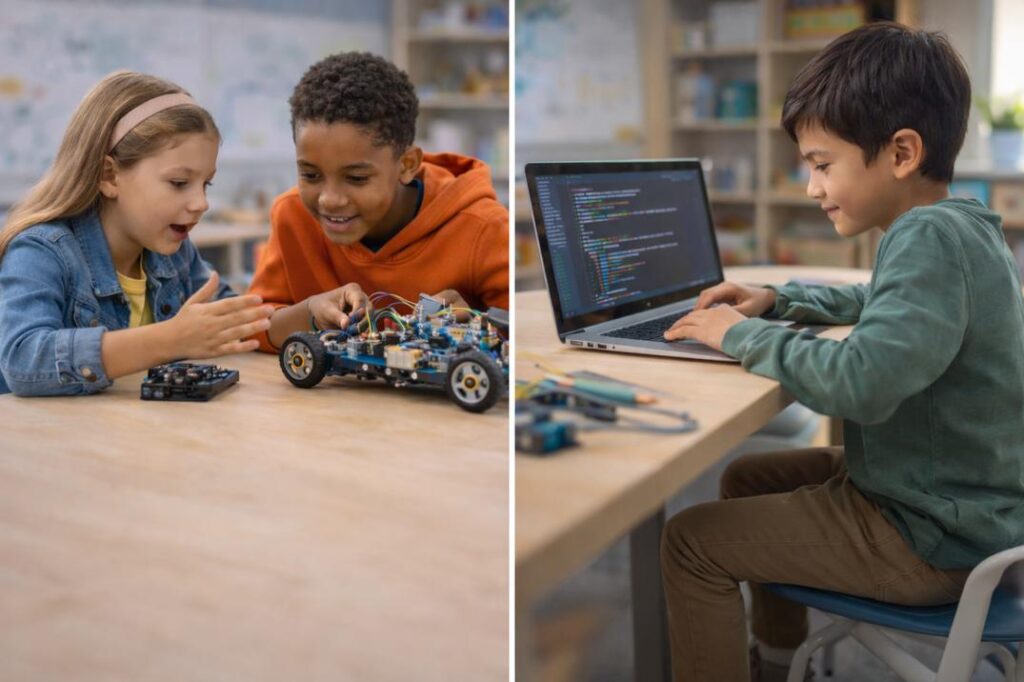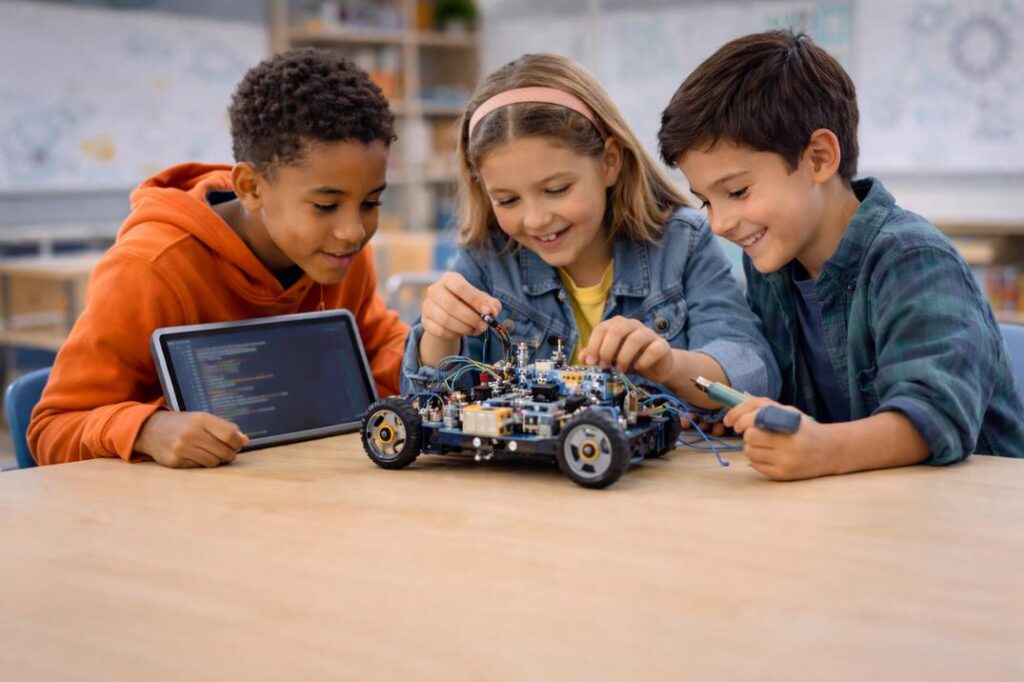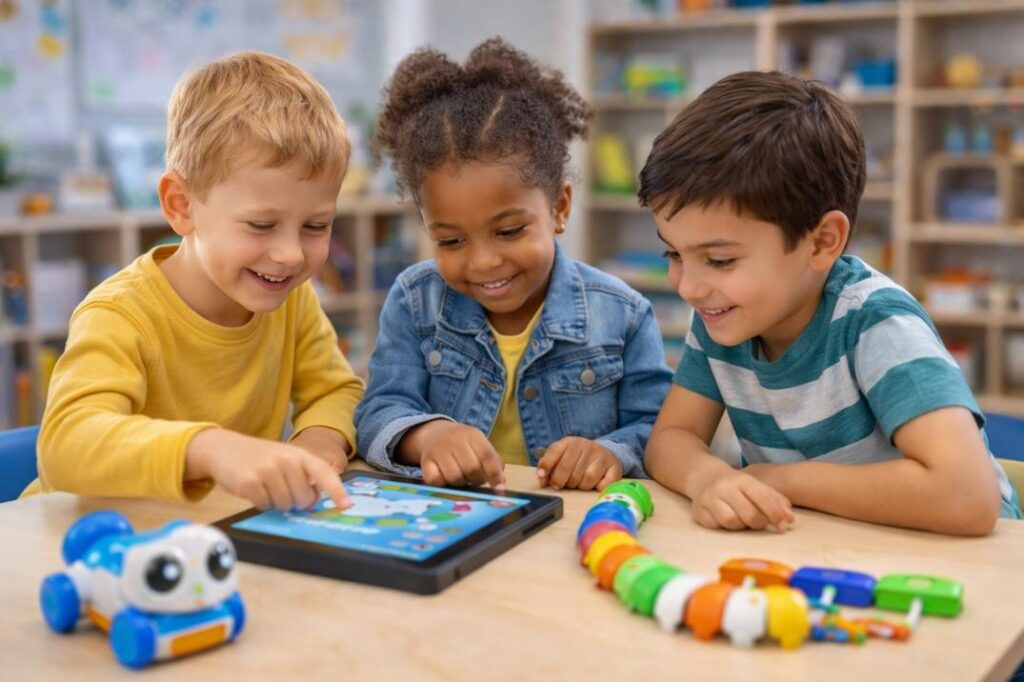

Artificial intelligence is no longer something children will encounter “someday.” It already shapes the tools they use, the content they see, and the systems that surround their daily lives. For parents, this reality raises an important question: what does it actually mean for children to develop AI skills, and why does it matter?
AI education for kids is not about turning children into programmers or exposing them to advanced technical concepts too early. At its core, it is about helping kids understand how intelligent systems work, how to think critically about them, and how to use technology thoughtfully and responsibly.
What Are AI Skills for Kids?
AI skills for kids focus on understanding ideas rather than mastering tools. Children learn how systems make decisions, how data influences outcomes, and why results are not always neutral or correct. These skills help children see technology as something that can be questioned, explored, and improved. Instead of learning complex algorithms, kids develop awareness of concepts such as pattern recognition, decision-making processes, and feedback loops. They begin to understand that AI systems are created by humans, shaped by data, and limited by design.
How AI Skills Fit Into Broader Tech Skills for Kids
AI skills are part of a larger group of tech skills for kids that support modern thinking. These include logical reasoning, problem-solving, creativity, and adaptability. Together, they help children navigate a world where technology is constantly changing.
Rather than focusing on specific platforms or tools, tech education today emphasizes transferable skills. Children learn how to ask good questions, analyze information, and adapt their thinking when outcomes change. These thinking habits are reinforced not only in structured AI classes, but also in inquiry-driven natural science classes, where experimentation shapes understanding, and in reflective social science classes, where students analyze systems, behavior, and decision-making patterns.
Why AI Skills Matter for Children Today
Children already interact with AI-driven systems through search engines, recommendation platforms, voice assistants, and learning tools. Without guidance, these systems can feel mysterious or unquestionable. AI skills help children develop awareness. They learn that results are generated based on data and rules, not absolute truth. This understanding supports critical thinking and reduces passive acceptance of information. Kids become more thoughtful users of technology rather than unquestioning consumers.
Key AI Skills Children Develop
One important AI-related skill is analytical thinking. Children learn to examine how inputs affect outputs and why systems behave the way they do. This strengthens their ability to reason and draw conclusions. Another key skill is ethical awareness. As children explore AI concepts, they begin to understand fairness, bias, and responsibility. These conversations encourage empathy and thoughtful decision-making. AI education also supports adaptability. Children learn that systems change, improve, and sometimes fail. This builds comfort with uncertainty and encourages flexible thinking.
AI Skills vs. Traditional Tech Skills
Traditional tech skills often focus on learning how to use tools efficiently. AI skills go a step further by encouraging children to think about how tools work and why they behave as they do. Instead of memorizing steps, children explore systems, patterns, and outcomes. This shift helps them become thinkers and creators, not just users of technology.
Are AI Skills Suitable for Young Children?
AI skills can be introduced in age-appropriate ways. For younger children, this might involve simple pattern recognition, cause-and-effect activities, or discussions about how digital tools make choices. For older children, concepts can expand to include data, models, and decision logic. The focus is not on complexity, but on curiosity and understanding. When introduced thoughtfully, AI concepts support cognitive development rather than overwhelm it.
How Smart Kids University Introduces AI Skills Thoughtfully
At Smart Kids University, AI skills are approached as part of a broader thinking framework. The emphasis is not on teaching children to rely on AI, but on helping them understand how intelligent systems work and how to engage with them critically.
Children are guided to explore questions, test ideas, and reflect on outcomes with the support of human mentors. This balance ensures that AI remains a tool for learning and creativity, not a replacement for thinking.
How Parents Can Support AI and Tech Skills at Home
Parents do not need technical expertise to support AI learning. Asking children how a system reached a result, encouraging them to question outcomes, and discussing fairness or accuracy can spark meaningful conversations.
Choosing programs that emphasize exploration, guidance, and reflection helps children build healthy, thoughtful relationships with technology.
Final Thoughts: AI Skills as a Foundation for Future Thinking
AI skills for kids are not about preparing for a specific career or predicting the future. They are about helping children understand the systems shaping their world and empowering them to think independently.
When children learn to question technology, recognize patterns, and reflect on outcomes, they gain skills that extend far beyond AI. These abilities support learning, decision-making, and responsible participation in a technology-driven world.
FAQs
Do children need coding experience before learning AI skills?
No. AI skills focus on understanding concepts like patterns, decision-making, and data influence rather than advanced programming. Coding can complement AI learning, but it is not required to begin exploring foundational ideas.
How are AI skills different from simply using technology?
Using technology involves operating tools. AI skills involve understanding how those tools make decisions, how results are generated, and how to evaluate whether outcomes are reliable or biased.
Can learning about AI make children more responsible digital users?
Yes. When children understand that AI systems are built on data and rules, they become more thoughtful about what they trust, share, and accept online. This awareness supports safer and more intentional technology use.
Will AI education replace human learning or creativity?
No. Strong AI education emphasizes that intelligent systems are tools created by people. The goal is to strengthen human thinking, creativity, and judgment, not replace them.