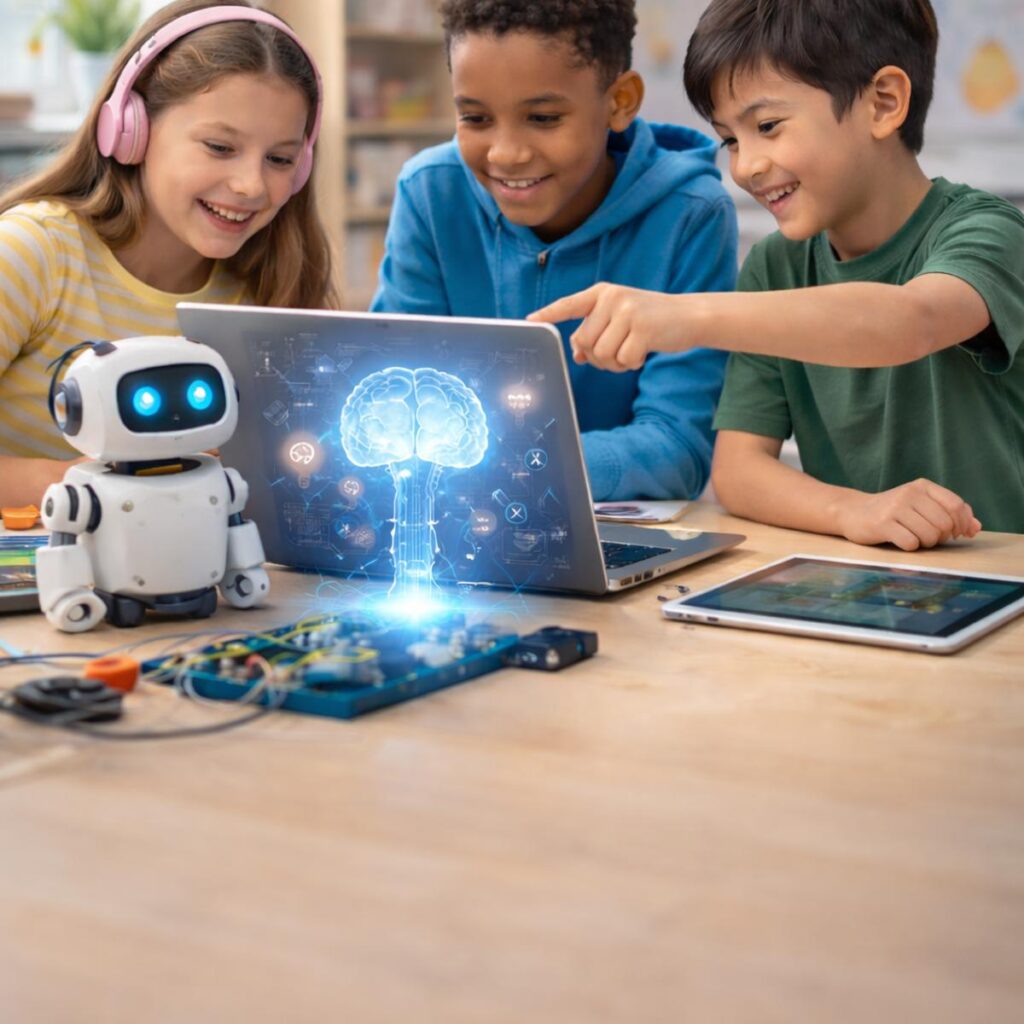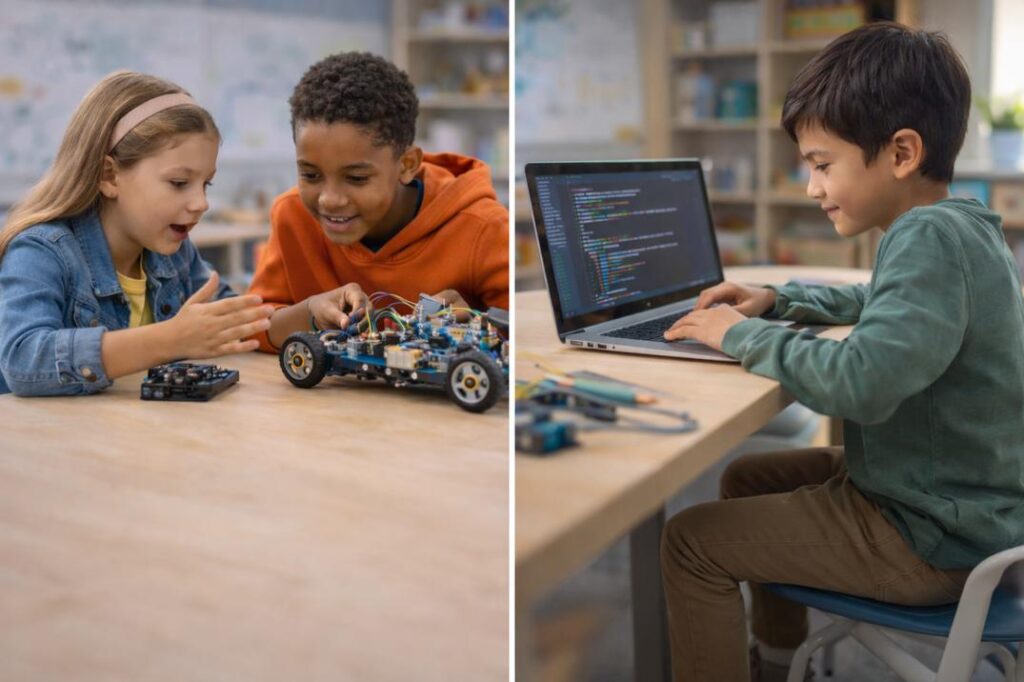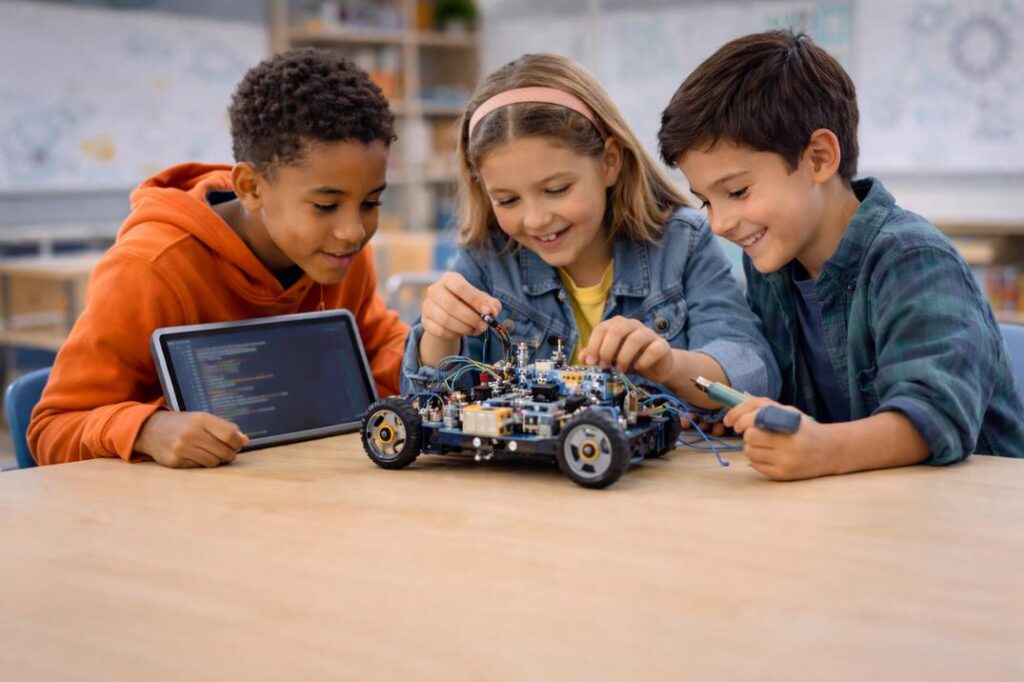

Technology is everywhere in how we work, communicate, and solve problems. For parents, this reality often raises a difficult question: When is the right time to introduce children to technology in a meaningful way? Early technology education can feel confusing, especially when concerns about screen time, overstimulation, and pressure come into play. But when approached thoughtfully, early technology education isn’t about more screens or rushing children ahead. It’s about helping kids develop the thinking skills they’ll rely on for life. This guide explains the real benefits of early technology education and what parents should know before getting started.
What Is Early Technology Education?
Early technology education focuses on teaching children how to think rather than simply how to use devices. Instead of passive consumption, it encourages active exploration. Children learn to understand how things work, ask questions, test ideas, and solve problems. At its core, early technology education supports logical thinking, systems thinking, problem-solving through experimentation, creativity within clear frameworks, and an understanding of cause and effect. The emphasis is not on mastering tools, but on developing a mindset that helps children approach complex situations with curiosity and confidence.
Why Early Exposure to Technology Matters
Children are naturally curious, and early childhood is a powerful developmental window. During these years, kids are especially open to exploring patterns, relationships, and mechanisms. Introducing technology concepts early helps channel that curiosity into structured thinking. Rather than leaving technology as something children simply consume, early education gives it meaning and context. Kids begin to see technology as something they can explore, question, and understand. This early exposure helps build adaptability in a world where technology is constantly changing.

Key Early Technology Education Benefits for Children
Stronger Problem-Solving Skills
Technology-based learning often involves trial and error. Children learn that mistakes are not failures, but valuable feedback. When something doesn’t work, they are encouraged to analyze why, adjust their approach, and try again. Over time, this process builds resilience, persistence, and a practical problem-solving mindset that applies far beyond technology.
Improved Critical and Logical Thinking
Early technology education encourages children to break complex problems into smaller steps, recognize patterns, and think through consequences before acting. These habits strengthen logical reasoning and help children become more intentional thinkers. The skills they develop support both academic learning and everyday decision-making.
Creativity Through Structure
When taught correctly, technology does not limit creativity. Instead, it provides a structured environment for creative thinking. Children use technology to design, build, and experiment within clear boundaries. This balance between freedom and structure helps them learn how to innovate thoughtfully rather than randomly.
Confidence and Independence
Seeing ideas turn into real outcomes helps children build confidence in their own thinking. Early technology education encourages kids to take ownership of their learning, try new approaches, and work through challenges independently. This sense of confidence can be especially meaningful for children who feel under-challenged in traditional school settings.
Early Technology Education vs. Screen Time
One of the most common misconceptions is that early technology education means more screen time. In reality, the two are very different. Passive screen use usually involves watching or scrolling with little engagement. Early technology education is active, intentional, and guided.
These learning experiences focus on thinking, interaction, and exploration rather than consumption. When designed well, they help children develop a healthier, more mindful relationship with technology.
What Skills Children Gain Beyond Technology
The benefits of early technology education extend well beyond technical knowledge. Children develop stronger communication and collaboration skills as they explain ideas and work through challenges with others. They learn patience and persistence by staying engaged with difficult problems. They also become more comfortable receiving feedback and adapting their thinking. Over time, they gain confidence in learning how to learn, which supports emotional growth, social development, and long-term academic success.
When Should Kids Start Learning Technology Concepts?
There is no single correct age to begin early technology education. Readiness matters more than a number. Some children show curiosity earlier, while others benefit from a slower introduction. What matters most is aligning learning experiences with a child’s developmental stage and natural interest.
Early technology education works best when it grows alongside the child, increasing in complexity as understanding deepens rather than pushing tools too early.
How Structured Programs Support Early Technology Education
Programs like Universidad Smart Kids approach early technology education as a guided thinking process rather than a technical shortcut. Instead of focusing only on devices or coding tools, these programs integrate AI classes, natural science classes, and social science classes into a connected learning experience that develops the whole child.
Children are encouraged to ask questions, test ideas, and learn at their own pace, with human mentors supporting their development. The structure provides consistency and progression, while still allowing space for creativity and independent thinking.
A strong early technology program often includes: clear learning pathways that gradually build skills across AI classes and broader STEM foundations. Hands-on projects in natural science classes that connect technology to real-world systems such as ecosystems, energy, or physics. Collaborative exploration in social science classes where students analyze human behavior, ethics, and the societal impact of innovation. Reflection moments where children explain their reasoning and strengthen communication skills.
For example, a student might explore machine learning concepts in an AI class, then connect those ideas to environmental data in natural science classes, and finally discuss ethical considerations of AI decision-making in social science classes. This interdisciplinary approach deepens understanding and creates meaningful internal connections across subjects.
The goal is not academic acceleration for its own sake, but helping children build confidence, independence, and a thoughtful relationship with technology as a creative, analytical, and socially responsible tool.
How Parents Can Support Early Technology Learning at Home
Parents do not need to be technology experts to support early learning. Encouraging curiosity, asking open-ended questions, and celebrating effort rather than outcomes can make a meaningful difference. Talking through problem-solving steps helps children reflect on their thinking, while choosing learning experiences that value depth over speed reinforces healthy habits. A supportive environment allows children to explore challenges safely and learn from mistakes.
Final Thoughts: Technology as a Thinking Tool, Not a Shortcut
Early technology education is not about preparing children for a specific career or pushing them ahead academically. It is about helping them develop confidence, curiosity, and flexible thinking in a complex world. When introduced thoughtfully, technology becomes a language children learn to understand, not a shortcut that replaces thinking. For parents, the real benefit lies in raising children who are not just comfortable with technology but capable of questioning it, shaping it, and using it wisely.
Preguntas frecuentes
Is early technology education appropriate for children who are not interested in computers?
Yes. Early technology education is not about computers specifically, but about thinking skills. Many activities focus on logic, problem-solving, and creativity rather than screens or devices. Children who enjoy puzzles, building, or asking “how things work” often respond well, even if they’re not drawn to computers.
Can early technology education support emotional and social development?
When designed well, it can. Children practice patience, collaboration, and communication as they work through challenges and explain their ideas. Learning how to handle frustration and adapt thinking also supports emotional resilience.
Does early technology education require previous experience or background knowledge?
No prior experience is needed. Programs are typically designed to meet children where they are and build understanding gradually. The focus is on exploration and thinking, not on technical mastery.
How do parents know if a technology program is developmentally appropriate?
Developmentally appropriate programs prioritize curiosity, guided exploration, and age-appropriate challenges. They avoid pressure, excessive screen time, and rigid outcomes, and instead encourage questions, experimentation, and reflection.